





READ TIME: 14m
DR JOHN DEMARTINI - Updated 4 months ago
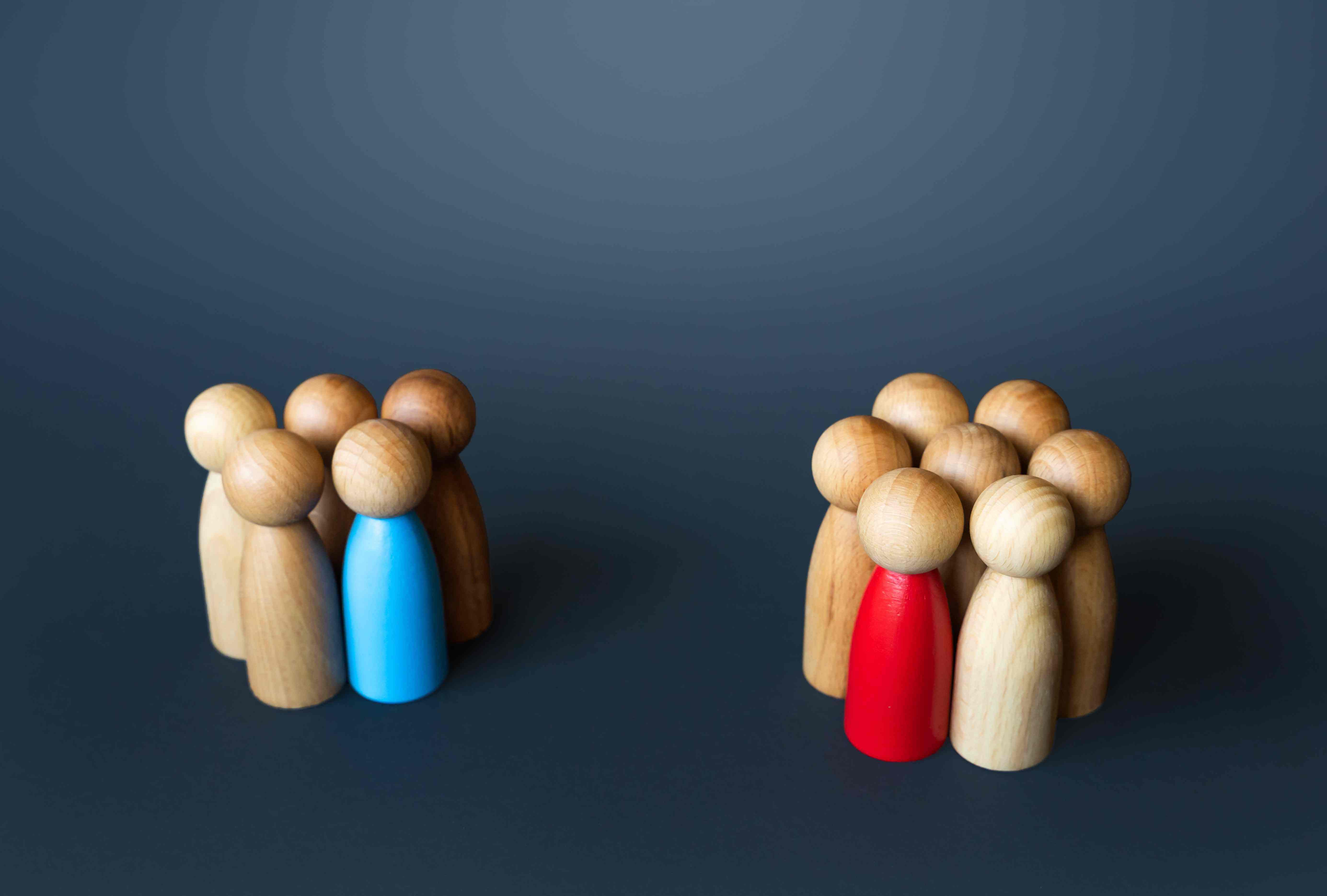
If you look carefully at society today, it’s easy to see the polarization in main stream media, politics, economics, and social media. Sometimes we may think that people appear to be moving toward more extreme positions, emotionally reacting to opposite sides, and becoming divided by ideology, values, and perception.
And while many people may try to define these divisions as simply “left” and “right,” the reality reveals a hidden order at play. These are not absolutes in isolation, but pairs of opposites, polarities that exist along a spectrum of human values and human behavior.
What’s interesting is that if you look carefully throughout history, psychology, economics, relationships, and even human physiology, you may discover that whenever one polarity becomes too extreme, an opposite polarity emerges to counterbalance it.
In many ways, what you see collectively in society also tends to reflect what occurs individually in human psychology. So before looking at these larger social polarities, it may be wise to first look at what occurs within individuals.
Whenever you meet somebody you admire and put on a pedestal, and you become too humble to admit what you see in them is also inside you, you tend to minimize yourself relative to them. And in the process of admiring them, you’ll often tend to inject some of their highest values, what’s most important to them, into your life and begin attempting to live according to them.
Values (what’s most important, or priorities) tend to flow from individuals perceived as more empowered toward those perceived as less empowered. You see this in families, schools, businesses, governments, and social systems. Rules, regulations, and expectations often move from the few who hold influence toward the many who are influenced by them.
So anytime you look up to or infatuate with SOMEONE ELSE, exaggerate them, or put them on a pedestal, you’ll attempt to sacrifice your own highest values in a futile attempt to fit into theirs. And when you attempt to live according to their injected values instead of your own unique set of highest values, it’s not sustainable.
As Ralph Waldo Emerson said, “Envy is ignorance; imitation is suicide.” Freud referred to this internalization of outer authority as the superego. The superego is just the injection of external values into your life that then moralize your behavior and lead you to buy into the idea that you ‘ought to’, ‘have to’, ‘should’, ‘must do’ certain actions according to this injected ideal.
So, when you perceive that you’re living according to what you “should” or “ought to” be according to somebody else’s values, you may feel pride. But when you can’t sustain it because it’s not authentically yours, you may feel shame.
Both are forms of imposter syndrome.
Anytime you exaggerate or minimize YOURSELF relative to another individual, you tend to wear a persona or facade instead of expressing your authentic self. However, what you may not yet know is that your real power is more likely to emerge in the center - what Aristotle called the golden mean - between the excess and deficiency of self-perception.
You can also look down on people and exaggerate yourself relative to them. And when you become too proud to admit what you see in them is also inside you, you may try to get them to live according to your values instead.
But trying to get other people to live in your highest values is just as futile as trying to live in theirs.
You can see this in relationships. In the beginning of a relationship, individuals will often attempt to live according to each other’s highest values. But over time, when that becomes unsustainable, resentment can emerge, and eventually individuals tend to want their life back.
In the same way, when you resent somebody, you may try to get them to live according to your values, and they often resist that too.
Most people eventually realize they don’t want to be fixed, or changed, but they do want to be loved and appreciated for who they are. And who they are tends to revolve around whatever is truly highest on their values - what you might call their ontological identity.
So anytime you attempt to change yourself relative to others, or change others relative to yourself, you often create non-sustainable futility and frustration:
- When you exaggerate yourself and look down on people, you may become narcissistic and want others to revolve around you and conform to you, living in your projected values.
- And when you minimize yourself and exaggerate others, you may sacrifice yourself altruistically and eventually become resentful.
Both polarities are non sustainable. And over time, whether you minimize yourself in shame or exaggerate yourself in pride, both personas eventually tend to oscillate back toward a center - toward your more authentic self. When you return to that more authentic center, you’re most likely to create sustainable fair exchange in relationships with other people.
As I mentioned earlier, what occurs individually, you also tend to see collectively in society.
When individuals rise in power, influence, economics, or leadership, they can sometimes begin assuming that their highest values are the values other people are supposed to live by. And when people perceive themselves as superior to others, they tend to project their highest values onto society and expect others to conform to them.
You can see this dynamic in economic systems, political structures, institutions, and social movements.
Individuals with greater economic influence tend to have greater influence over laws, regulations, institutions, and social expectations. And individuals with less economic influence often feel they have less say in those systems. So, you can end up with what is sometimes called “the one and the many” - one side perceiving itself as more empowered (the few people empowered) and the other side perceiving itself as more sacrifice (the many people disempowered).
Now, this is not an absolute. I’ve met many business leaders who are highly balanced, fair, and deeply caring. Nor is one side “good” and the other side “bad.” These are simply tendencies that can emerge when societies polarize toward extremes.
Those who are more economically oriented often tend to think in terms of economics, business, finance, production, savings, investments, long-term planning, infrastructure, and future generations. Others who are more focused on immediate survival, family, community, social support, and day-to-day concerns may naturally place a greater emphasis on collective support systems.
So what you often see politically are two different value systems expressing themselves through two different social models:
- One side may place a greater emphasis on individual responsibility, production, investment, and economic freedom.
- The other side may place a greater emphasis on collective responsibility, social support, family, and community.
Over time, societies tend to oscillate between the two.
If you look carefully throughout history, you can see these pendulum swings repeatedly occurring. One administration may lean more socially oriented, and another may lean more economically oriented. Then over time the pendulum swings again. These oscillations tend to occur because anytime one polarity goes too far toward an extreme, the opposite polarity tends to emerge to counterbalance it.
For example, if societies move too far toward concentrated wealth and the gap between the haves and have-nots becomes too extreme, social unrest, revolutions, and counter movements can emerge. And if societies move too far toward dependency and unsustainable distribution systems, opposite reactions can emerge calling for greater structure, accountability, productivity, and economic stability.
Both extremes tend to breed their opposite.
And if you look carefully, nature seems to continually strive for balance.
You can see this not only in politics and economics, but throughout life: competition and cooperation, testosterone and estrogen, war and peace, individuality and collectivity, savings and consumption, capitalism and socialism.
Anytime one polarity becomes too extreme, counterbalancing forces tend to emerge.
That’s why I don’t find it productive to make capitalism wrong or socialism wrong. A healthy balance of the two is more likely to create stability. But anytime societies move too far toward one extreme or the other, they tend to destabilize and eventually generate reactions attempting to restore equilibrium.
So in many ways, the real mission may actually be the integration of the two poles.
As Aristotle described in his work on excess and deficiency, the vices on either side tend to have a golden mean in the middle. And that golden mean is where greater stability and wisdom tend to emerge.
If you look carefully at individuals who lead effectively over long periods of time, they often have the capacity to govern emotional extremes instead of becoming trapped by them.
Robert Greene speaks about this when he says that if you can’t manage emotions, don’t expect to lead effectively. Because if the amygdala is running your life with polarities, biases, tribal thinking, ingroup-outgroup bias, confirmation bias, disconfirmation bias, false positives, false negatives, and emotional reactions, you’ll tend to swing from one extreme to another. But when you understand that both sides serve, you tend to become more reasonable and stable.
For example. the people who build companies depend upon the people helping support and sustain those companies. And the people working within those companies also benefit from the vision, leadership, structure, and risks required to build them in the first place. So both sides serve.
If a company has only executives and no workers helping support the company, they’re not likely to remain executives for very long. Their leadership depends upon the contribution of other people. And I’ve seen individuals who run businesses from that balanced perspective genuinely care about the people helping them build the company, and those businesses often thrive. I’ve also seen situations where people go too far toward one extreme and eventually generate backlash, labor unrest, revolutions, unions, and counter movements attempting to redistribute things and restore equilibrium.
So I’m not here to make socialism bad or capitalism good, or capitalism bad and socialism good. I don’t find that productive. These are part of a full and necessary spectrum of human values and human behavior.
The question becomes: are we aware enough and wise enough to avoid becoming trapped in emotional extremes and ideological reactions?
Because, as I mentioned earlier, every time you take a rigid side, you tend to create an opposite side.
There’s a principle sometimes referred to as the law of Eristic Escalation, which proposes that whenever somebody strongly identifies with one ideology, an equal and opposite ideology tends to emerge to counterbalance it. You can see it in politics, media, social movements, and cultural debates - pro this, anti this, pro that, anti that. And all of a sudden people get trapped in polarized debate instead of what philosophers historically referred to as dialectic - the synthesis or integration of opposites.
If you study Heraclitus, you’ll see he described what he called the unity of opposites. And even in early Christianity, the logos was associated with this idea of integrating opposites.
In other words, the idea that wisdom is basically the capacity to see both sides simultaneously.
And when you can see both sides simultaneously, you tend to become less reactive and more capable of creating sustainable solutions. You can build wealth and still appreciate the people helping create it. You can value both productivity and wellbeing, structure and support, individuality and community.
And if societies become wise enough to integrate those polarities instead of emotionally reacting to them, they tend to become more stable.
Nature seems to continually strive for equilibrium.
Too little water can dehydrate you. Too much water can drown you. The appropriate amount supports wellness. And the same thing applies psychologically, socially, economically, and politically.
You can see the same thing play out in the media.
Media often amplifies extremes because extremes capture attention. Emotional polarization captures attention. Media sells distractions. It sells what grabs attention. But what captures attention is not necessarily what serves.
So it is wise to become aware of sensationalism and ideological reactions.
Here’s what I am inspired to share with you today:
If you live congruently with your highest values or priorities, you’re less likely to become trapped in the emotional reactivity, polarization, and survival-driven responses of the amygdala, and more likely to activate the executive center of your brain.
In that state, blood, glucose and oxygen tend to go into the medial prefrontal cortex - the executive center - where you become more capable of governing impulses and instincts instead of being governed by them.
And when you learn to ask quality questions that help balance your perceptions, you are more likely to liberate yourself from emotional extremes as a result.
The quality of your life is based on the quality of the questions you ask:
When you ask questions that help you see both sides simultaneously, you tend to become more centered, more balanced, more objective, and less likely to be swayed by incomplete ideologies or emotionally charged reactions.
True power is not found in one pole without the other.
Trying to have a positive pole without a negative pole is a bit like trying to create a magnet with only one polar side. Or trying to have a coin with only heads and no tails. It’s not likely to happen or be sustainable.
In closing, social and political polarities, by themselves in isolation, don’t tend to sustain themselves for very long. But when they’re integrated wisely - just as the brain integrates polarities - that’s often where greater stability, resilience, and power emerge.
So perhaps the wisest thing we can do is not become trapped in rigid ideological extremes, but instead ask: What balance might nature be attempting to restore?
Because wisdom may not necessarily be found in taking a rigid side. It may instead emerge from the capacity to see both sides simultaneously.
To Sum Up
- What you see collectively in society often reflects what occurs individually in human psychology.
- Anytime you infatuate with somebody and put them on a pedestal, you tend to inject some of their values into your life and sacrifice your own highest values in an attempt to fit into theirs.
- Anytime you exaggerate or minimize yourself relative to another individual, you tend to wear a persona or facade instead of expressing your authentic self. Your real power is more likely to emerge in the center, what Aristotle called the golden mean.
- Nature seems to continually strive for balance. Anytime one polarity goes too far toward an extreme, the opposite polarity emerges to counterbalance it.
- You can see these oscillations throughout life: competition and cooperation, war and peace, individuality and collectivity, capitalism and socialism.
- So I don’t find it productive to make capitalism wrong or socialism wrong. Both sides serve, and both extremes tend to breed their opposite.
- Every time you take a rigid side, you tend to create an opposite side.
- Wisdom is basically the capacity to see both sides simultaneously.
- Media often amplifies extremes because extremes capture attention. But what captures attention is not necessarily what serves.
- If you live according to your highest values and highest priorities, you’re more likely to activate the executive center instead of becoming trapped in emotional reactivity and polarization.
- As I often say, the quality of your life is based on the quality of the questions you ask. And when you ask questions that help balance your perceptions, you tend to liberate yourself from emotional extremes.
- True power is not found in one pole without the other. Social and political polarities, by themselves in isolation, don’t tend to sustain themselves very long. But when they’re integrated wisely, that’s often where greater stability, resilience, and power emerge.
Are you ready for the NEXT STEP?
If you’re seriously committed to your own growth, if you’re ready to make a change now and you’d love some help doing so, then click on the LIVE chat button bottom right of your screen and chat to us now.
Alternatively, you can book a FREE Discovery call with a member of the Demartini Team.

Interested in the Breakthrough Experience seminar?
If you’re ready to go inwards and do the work that will clear your blockages, clarify your vision and balance your mind, then you’ve found the perfect place to start with Dr Demartini at the Breakthrough Experience.
In 2 days you’ll learn how to solve any issue you are facing and reset the course of your life for greater achievement and fulfillment.
Click HERE to find out more
Important Notice:
The content shared in this blog is for education and personal development. It is not intended to diagnose, treat, cure, or prevent any psychological or medical conditions. The information and processes shared are for general educational purposes only and should not be considered a substitute for professional mental-health or medical advice. If you are experiencing acute distress or ongoing clinical concerns, please consult a licensed health-care provider.
Read full disclaimer HERE



 Loading...